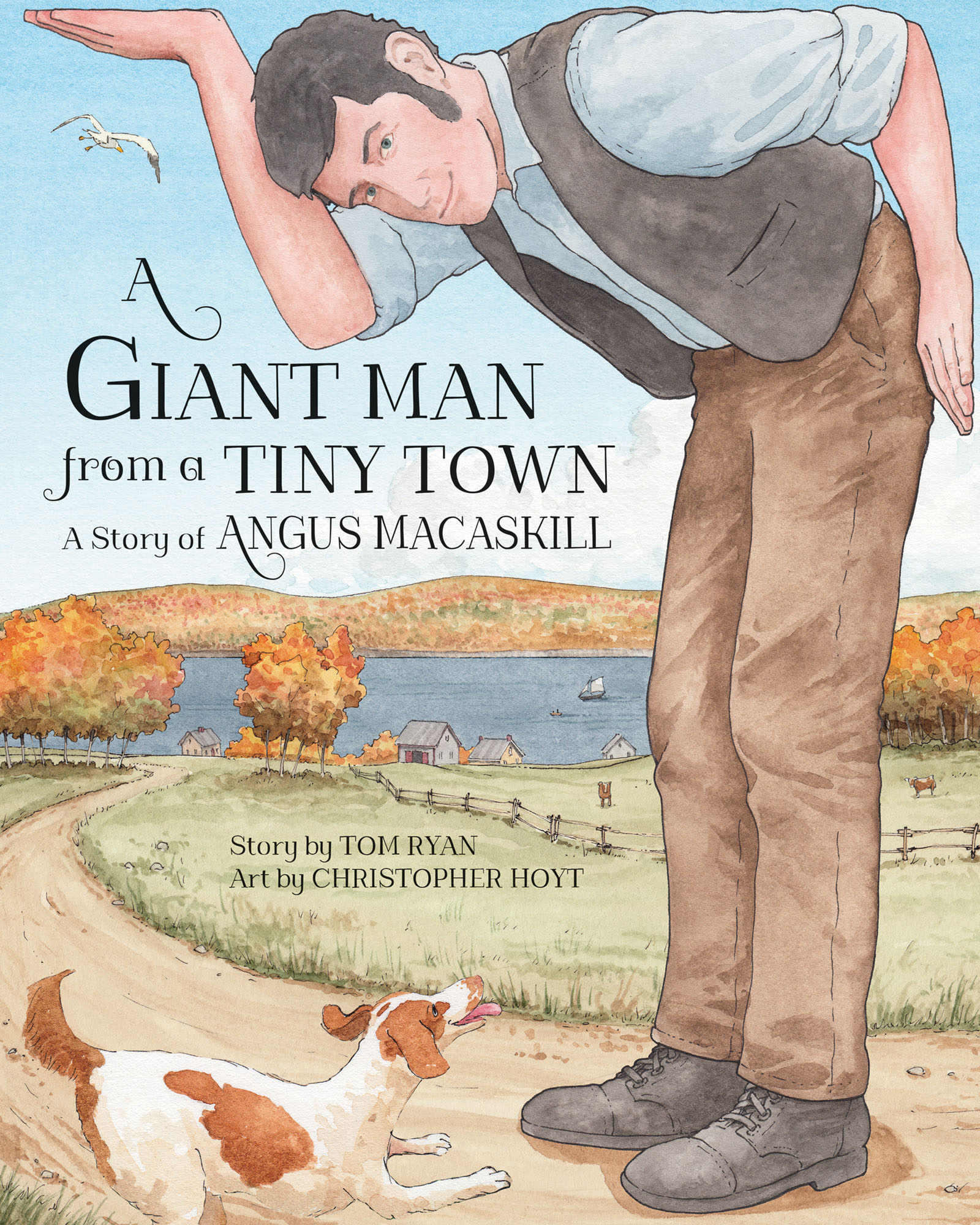
<b>Angus MacAskill, known far and wide as the Cape Breton Giant, travelled the world performing for crowds, but never stopped longing to return to the place he loved the best: his Cape Breton home.<b>
by
<b>Angus MacAskill, known far and wide as the Cape Breton Giant, travelled the world performing for crowds, but never stopped longing to return to the place he loved the best: his Cape Breton home.<b>
<p>”Although diminished in numbers, Birchtown remains a proud symbol of the struggle by Blacks in the Maritimes and elsewhere for justice and dignity.” So says the plaque at Black Loyalist Heritage Park in Birchtown, commemorating the former Black slaves who fought with the British in the American Revolutionary War to gain their freedom in the form of a small plot of land near Shelburne, Nova Scotia. </p>
<p>In <i>Birchtown and the Black Loyalists</i>, Wanda Taylor recounts the incredible story of the Black Loyalists of Birchtown for young readers. With educational and accessible language, readers are introduced to the journey of Black American soldiers taken from Africa as slaves, their quest for freedom, the settlement and struggle of Black Loyalists on Nova Scotian soil, and the enduring spirit of their descendants in spite of a history marked by hardship and loss. Includes informative sidebars, highlighted glossary terms, recommended reading, historic timeline, an index, and dozens of historical and contemporary images.</p>
<p>One hundred years ago, on December 6, 1917, the French munitions ship <i>Mont Blanc</i> collided with the Belgian relief vessel <i>Imo</i> in the Halifax Harbour. At first, a small fire broke out aboard the <i>Mont Blanc</i>, which grew bigger crowds of people and emergency responders linded the shores of Halifax and Dartmouth to get a better look. Suddenly, the <i>Mont Blanc</i>’s explosive cargo blew up, flattening homes and businesses, and triggering a tsunami.</p>
<p>Amid the confusion and devastation that followed the blast was fourteen-year-old Barbara Orr, who had been walking from her neighbourhood in Richmond to a friend’s house. Follow Barbara as she navigates post-explosion Halifax, learning about rescue efforts, the kindness of strangers, and the bravery of heroes like Vincent Coleman along the way.</p>
<p>Part of the popular <i>Compass</i> series, this full-colour non-fiction book includes highlighted glossary terms, informative sidebars, over 50 illustrations and historical photographs, a detailed index, and recommended further reading. In commemoration of the tragic event’s 100th anniversary, <i>Broken Pieces</i> is a great resource for young readers and educators.</p>
The children of Africville, Nova Scotia, lived in a special community where everyone knew their neighbours, and all helped and cared for each other. It was the perfect place for children to play and grow up. <i>The Children of Africville</i> is the remarkable story of these children during the community’s final years, before it was torn down and its families were relocated. Full of photographs and stories from Africville people, this book is an important celebration of Nova Scotia black history, its vibrant community, and the children who lived there.
<p>On April 10, 1912, the <i>Titanic</i> departed Southampton, England, on its first voyage across the Atlantic, carrying 2,240 passengers, 109 of them children. Introducing young readers to the ship that couldn’t sink, <i>Children of the Titanic</i> follows three children—Beth Cook, age six, travelling third class; Charlotte Murphy, age eight, second class; and John Crosby, age eleven, first class. We meet them as they board and get settled in their rooms in different parts of the vessel, witness their experience of the gripping sequence of events early in the morning of April 15, and see their eventual arrival in New York on the rescue ship <i>Carpathia</i>.</p>
<p>Bringing to life the sights and sounds of the ship from a child’s perspective, author Christine Welldon tours young
readers through the plush first- and second-class staterooms, the gymnasium, swimming pool, library, and French café, as well as the humbler accommodations in third class. </p>
<p>The book includes over 40 photographs, highlighted glossary terms, and sidebars on aspects of shipbuilding, early twentieth-century life, and the events of April 15, 1912.</p>
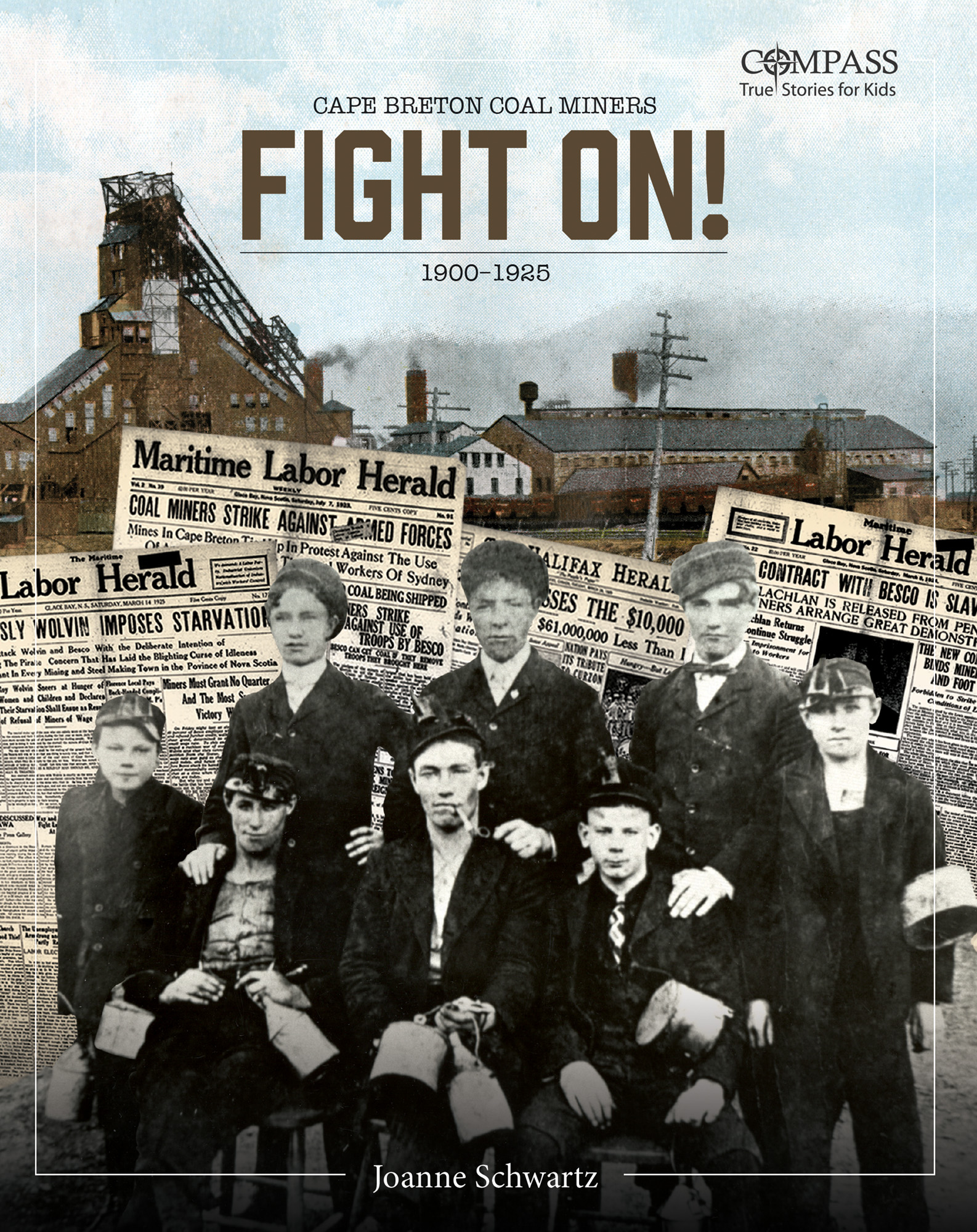
In early twentieth-century Cape Breton, coal mine workers spent all day in dangerous conditions. But the brave miners stood up to the companies, going on strike and risking their livelihoods to achieve better working conditions and healthier communities. <i>Fight On!</i> is at once an engaging history and a passionate call to action against injustice.
<p>Discover some of the most important moments of Canada’s history by getting to know the children and their families who arrived at Halifax’s Pier 21. From countries as far away as Estonia, Italy, and the Ukraine (just to name a few), these immigrants all travelled through the “gateway to freedom” to call Canada home.</p>
<p>”Guest child” Jamie from Scotland and Jewish orphan Mariette were both sent to Canada as children to escape the same war. Heili’s Estonian family boarded the <i> Walnut </i> to sail away from Russian Communist rule. Luigi’s family came from Italy to find work in Canada after the war, while Maryke’s arrived from Holland in search of farmland.</p>
<p>Now renamed the Canadian Museum of Immigration, Pier 21 accepted over one million new Canadians between 1928 and 1971. Many were nervous about their new home, but although they arrived from distinct countries and cultures, each family embraced the safety and possibility of a life in Canada. To arrive was to escape the past while keeping memories of their homelands close. Pier 21 was the first step toward a new life.</p>
<p>With over 40 photos, a glossary, timeline, and sidebar features on the pier itself and the home countries of those who passed through it, <i> Pier 21: Listen to My Story </i> provides an excellent introduction for chilldren to this key landmark in Canada’s immigration history.</p>
<p>Découvrez des moments parmi les plus marquants de l’histoire du Canada en apprenant à connaître les enfants et les familles débarqués au Quai 21 de Halifax. Venus de pays lointains tels l’Estonie, l’Italie et l’Ukraine (pour n’en nommer que quelques-uns), ces immigrants ont tous franchi les « ports de la liberté » pour faire du Canada leur nouvelle patrie.</p> <p>Jamie, un « enfant invité » originaire d’Ecosse et Mariette, une petite orpheline juive, ont tous deux été envoyés au Canada à un jeune âge afin d’échapper à la même guerre. La famille de Heili, in jeune Estonienne, a fui le régime communiste russe en prenant la mer à bord du Walnut. La famille de Luigi est venue d’Italie chercher du travail au Canada après la guerre et la famille de Maryke est arrivée de Hollande à la rechercher de terres à cultiver. </p> <p>Aujourd’hui connu sous le nom de Mussée canadien de l’immigration, le Quai 21 a accueilli plus d’un million de nouveaux Canadiens, de 1928 à 1971. Beaucoup d’entre eux craignaient ce que leur réservait leur pays d’adoption. Cependant, toutes ces familles, même si elles étaient de cultures et d’origines différentes, ont cru à promesse d’un vie meilleure et plus sûre que leur offrait le Canada. En débarquant au pays, les immigrants échappaient au passé, emportant dans leur cœur de précieux souvenirs de leur lieu d’origine. Le Quai 21 représentait le premier pas vers une nouvelle vie. </p>
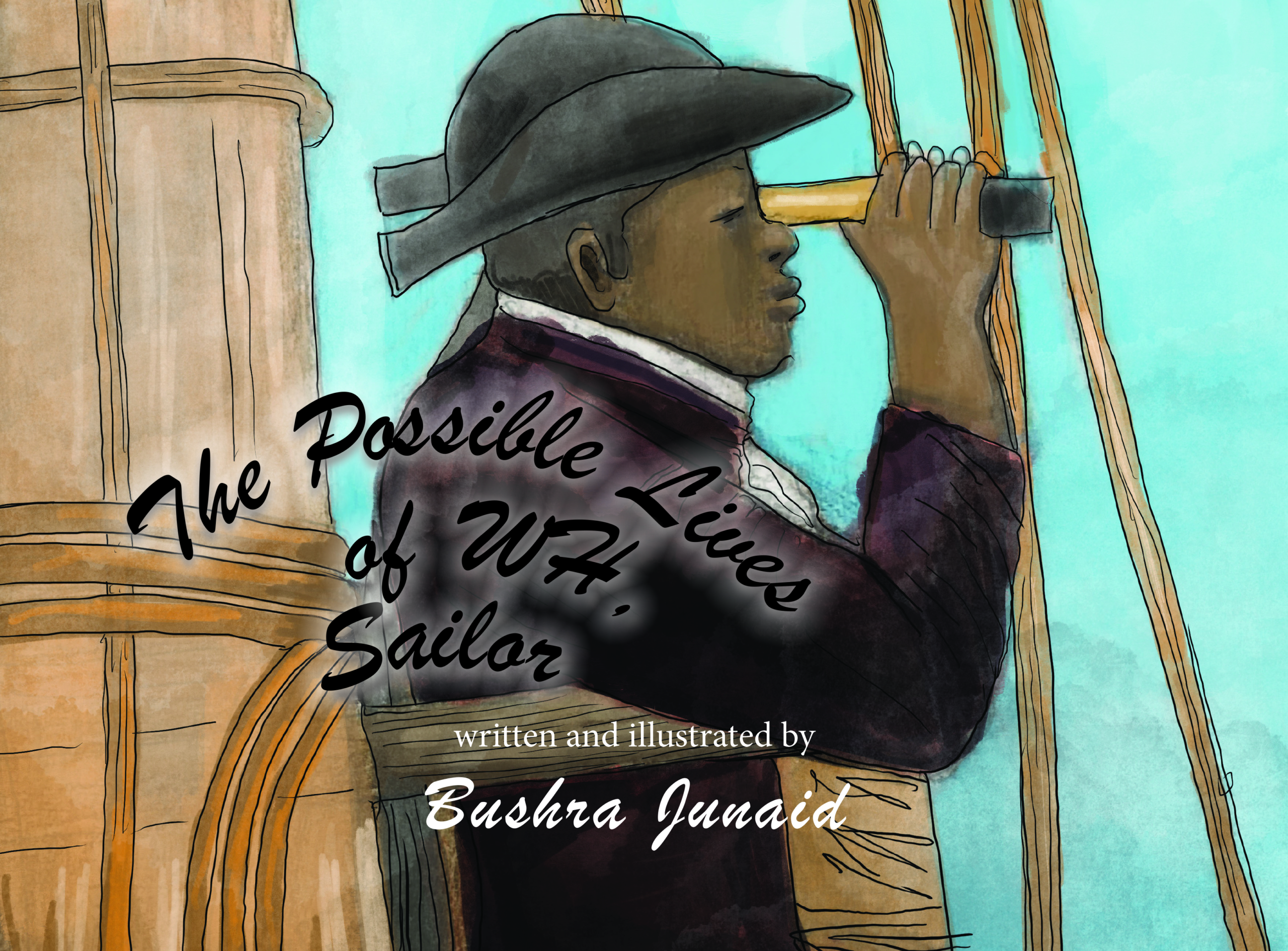
<p>”What truths would you utter from your mouth<br> If you could tell us your story “<br> <ul>From “The Possible Lives of W.H., Sailor”</p> <p>In this powerful and deeply moving poetic […]