Enter your postal code to locate your nearest local book seller and library:

General

<span style=”mso-ansi-language: EN-US”><span style=”FONT-FAMILY: Arial; COLOR: black; mso-ansi-language: EN-US”><span style=”FONT-FAMILY: Times New Roman”><span style=”mso-ansi-language: EN-US”> <p class=”MsoNormal” style=”MARGIN: 0in 0in 8pt” align=”left”><span style=”mso-ansi-language: EN-US”>Folklore comes to life in <em>A Door […]

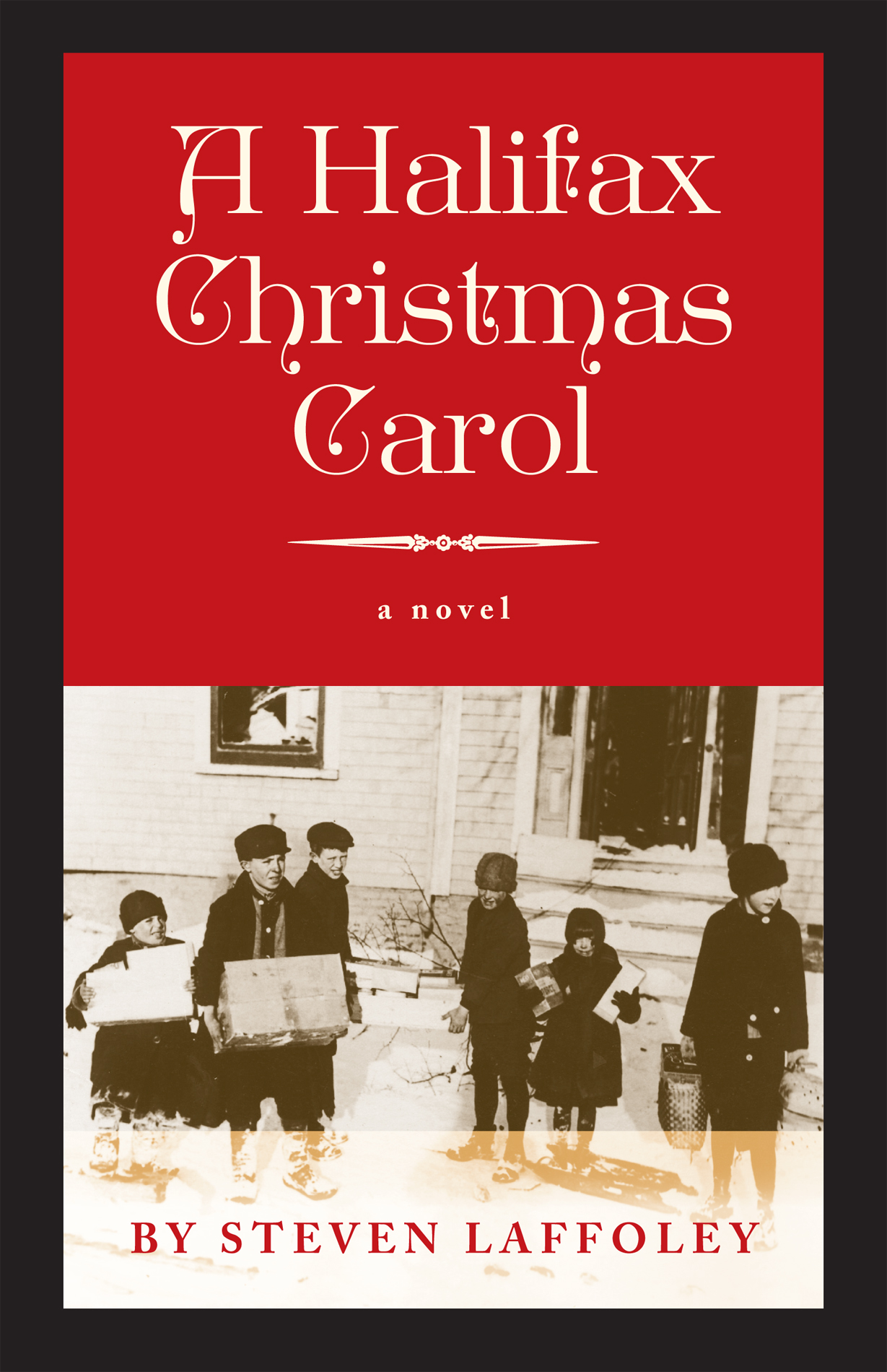
<p>It is December 1918. The old world–shaped by the values of Queen Victoria and Charles Dickens– is gone and the new world now wallows in post-war chaos and darkness. </p><p>A veteran of the gas attacks and trenches, Michael Bell has returned home to a city traumatized by war and devastated by an explosion, where he finds work at <i>The Halifax Herald</i> writing about what he sees as the truth, about an age defined only by lawlessness, disease, and disorder.</p><p>Then, four days before Christmas, Michael finds his truth-telling efforts challenged by a small, one-legged boy who arrives at the newspaper office with a single, silver twenty-five-cent piece for “the kids.” When the boy strangely disappears, the paper’s editor, Walter Stone, sees a potential Dickensian story for a city in desperate need of hope. He assigns Michael and new reporter Tess Archer the job of finding the boy and telling his story–all before the Christmas Eve edition. </p><p>At first, Michael objects, believing such stories to be dangerous lies in the face of the dark truths. However, after a mysterious dream of his mother leads to difficult questions, he accepts the assignment, if only to prove small acts of generosity are meaningless in the face of a growing darkness. Yet, as Michael follows his leads through an array of the city’s desperate people, he is increasingly haunted by the hidden meaning of his dream and soon realizes understanding will only come if he finds the boy. But for Michael and the city, time is fast running out. </p><p>Filled with a cast of compelling characters and vivid images, <i>A Halifax Christmas Carol</i> tells the story of a true age of darkness and the transformative power of hope.</p>

<span style=”FONT-SIZE: 16px; BORDER-TOP: 0px; FONT-FAMILY: Times New Roman; BORDER-RIGHT: 0px; VERTICAL-ALIGN: baseline; WHITE-SPACE: normal; WORD-SPACING: 0px; BORDER-BOTTOM: 0px; TEXT-TRANSFORM: none; FONT-WEIGHT: 400; COLOR: black; PADDING-BOTTOM: 0px; FONT-STYLE: normal; PADDING-TOP: […]

Coming in May. <p><i>Acting on the Island and Other Prince Edward Island Stories: New & Selected</i> gathers together 21 stories set on PEI from the nearly 500 wide-ranging and eclectic […]

  <p>It is the 1960s and Professor Jon Andrews is haunted by memories of growing up in an abusive, ultra-religious home.<br><br> He leaves his teaching job in Montreal to go […]

<p>Miranda Murray lives in the city where she is immersed in the challenging and exhausting work of creating live theatre. She loves what she does, but when she meets a […]

<p>Closing Down Heaven is on CCBC?s Best Books for Kids & Teens and CanLit for Little Canadians? list of Exceptional Novels for Young Readers.</p> <p>In this highly readable YA novel, […]

<p>Taylor Colby grew up in the tiny Nova Scotia fishing village of Nickerson Harbour, but his guitar-playing skill led him to become a much sought-after studio musician in Los Angeles. Along with him went Laura, his childhood sweetheart and soulmate. In L.A., Laura becomes enamoured with the dark side of rock and roll life, leaving Taylor lost, distraught and deeply damaged. Taylor realizes he has to go back home to Nickerson Harbour, to confront Laura’s parents, to reunite with his father and to understand the truth of his own dysfunctional family.</p> <p>Back in Nova Scotia, Taylor learns that his mother, who had abandoned him as a child, wants to come home to reconcile with her own past. Taylor is haunted by his loss and grief but must also come to terms with some hidden truths about Laura. As he begins to make sense of his past, he befriends an American feminist professor who is trying to start life anew in Canada with her troubled twelve-year-old son. </p> <p><i>Cold Clear Morning</i> is a novel about dreams realized and dreams shattered. It is about love and loss, hunting and healing, grief and forgiving. Taylor Colby speaks his story of what it takes to pick up the remains of a shattered life and find renewed purpose and hope. It is the story of going back to the home that you thought you could never return to. In his odyssey from Nova Scotia to British Columbia, Los Angeles, Philadelphia and back home, he attempts to find real meaning to his life of adventure and despair. </p>

Calvin’s life is at a crossroads. He needs to figure out why he exists, or if he exists at all. He begins a relationship with Susie, who lives in Pi’tawk, […]

<p>After returning from active service in the Second World War, Jimmy Flynn is living alone with his nightmares — until a suspicious death and unexpected inheritance draw him back to […]

<span style=”FONT-SIZE: 15px; COLOR: rgb(33,33,33); TEXT-ALIGN: justify; -webkit-text-stroke-color: rgb(33, 33, 33); -webkit-text-stroke-width: initial”><span style=”FONT-SIZE: 16px”>
<p align=”left”><span style=”COLOR: rgb(33,33,33); TEXT-ALIGN: justify; -webkit-text-stroke-color: rgb(33, 33, 33); -webkit-text-stroke-width: initial”>Wish Mooney’s earliest memory in life is finding a corpse in the Waterford River. </span>Jarring stuff for a four-year-old, yet far from the most shocking or bizarre event he would witness growing up in west-end St. John’s, next door to the Waterford Hospital. Or as it was unabashedly labelled before the advent of political correctness: The Mental. An unfortunate moniker by today’s stigma standards, but one legitimately derived from the original name of the place—The Hospital for Mental and Nervous Diseases—when it opened in 1854. Not until 1972 would it be renamed after the river that runs by it. But in Mooney’s world, which revolves mostly in and around the asylum’s drab, depressing confines, it was colloquially The Mental just as its largely despondent inhabitants were the mental patients. Of course, they were called a lot of other things, too. Such terms and corresponding attitudes were still very much par for the course in the mid-1970s, as the bullied Mooney and co-horts traipsed all over The Mental, and its adjacent field, with reckless abandon and little regard for the consequences of what they did or, maybe more importantly, what they said. Even less consideration was given to any risk in all that, since run-ins with patients—for whom the field was allegedly put there—were usually harmless and sometimes honestly comical. Thus was the oft-surreal environment that unavoidably enveloped Wish and the rest of his strictly Irish-Catholic eight-member Mooney clan, including the quietly acknowledged other realities of the place—the sad, the tragic, the maniacal. Little did Wish ever consider that any or all of that would come full circle later in life when, as the court reporter for the <i>Daily News</i>, he is thrust into the middle of his own life story, replete with shocking conclusion.</p></span></span>