


Munju Ravindra Reviews a Work of Contemporary Eastern Gothic
I jumped at the chance to review this book, a contemporary gothic fiction inspired by the true story of Nova Scotia’s notorious Goler clan. The Golers!? I took on the review with a train-wreck curiosity.
I was 13 when the Goler story broke, and like many Nova Scotian teens of the time, was morbidly fascinated with the tales of incest, crime and poverty emanating from the Annapolis Valley—land of fresh corn and the Apple Blossom Festival. Bogeymen? Here? It seemed impossible.
Becca Babcock’s debut novel, One Who Has Been Here Before, tells the tale of nerdy Emma G Weaver, an Edmonton-based Master’s student doing a historical auto-ethnography of the Gaugin clan, Babcock’s stand-in for the Golers of history. It doesn’t take long to realize that Emma’s middle initial G stands for Gaugin, and that she had been adopted out after local authorities broke up the clan, putting the children into foster homes.
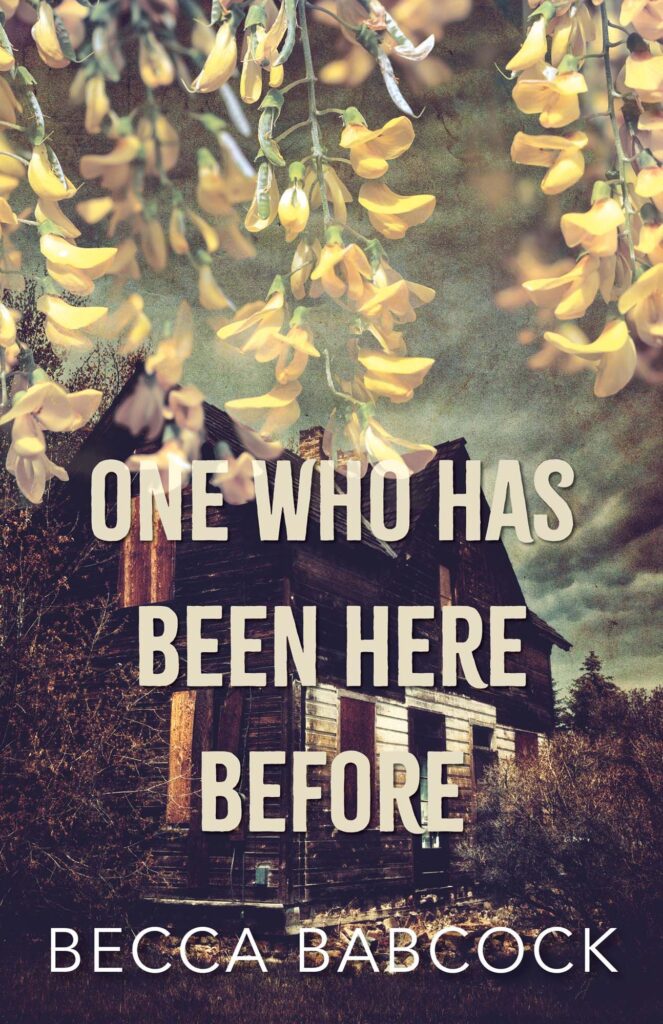
Emma travels to Nova Scotia, where most of the novel takes as she searches through archives, newspaper clippings, local genealogical society resources and her own hazy memory to try to piece together the story of the Gaugin clan. As a plotline, this research process should be boring, but Babcock handles it deftly, sewing pieces of archival research (a newspaper article, a first-person account, a diary entry) into the story as she peels off the layers of the onion, revealing Emma’s history as the protagonist herself uncovers it. It is not dramatic, but it is compelling.
The Weavers foster and later adopt Emma, eventually moving her to Alberta. The Gaugin compound is abandoned when the clan is raided and falls into disrepair. Emma has siblings, but the only one she seems to remember is her sister, who was first fostered with her by the Weavers then taken away by social workers, and lost to Emma.
Babcock makes it clear to the reader that, in addition to trying to please her thesis supervisors, Emma is trying to find her sister. But Emma herself seems oblivious to her deeper quest. She battles her own self-loathing with sporadic bursts of yoga, phone calls home to her ever-reassuring adoptive family, and what she calls her “swagger”—a brassy cover up of her inner squashed bug, showing up as when she dismissively tells the local archivist that her research project is “just some boring local history. Kind of bullshit.”
I confess I didn’t fall for Emma, as I do with many protagonists. She reminded me of an early Daenerys Targaryen from Game of Thrones fame, carrying a dark past that could have made her strong if she had confronted it, but spending an awful lot of her story waiting for someone else to make the first move. Emma annoyed me, but Babcock’s writing did not.
Babcock perfectly nails Emma’s anxiety, casting her as fuzzy, untethered, uncertain of her feelings, as if clouded in a haze of the Lorazepam she keeps in her purse and tries not to take. Emma’s anxiety was so well-crafted, I found myself holding my breath along with her throughout much of the novel, wondering when the dark secret implied in the title would finally be revealed.
It turns out it’s not that dark. Despite ominous chapter titles like “The Woodsman and the Wolf” and “The Bread Crumb Trail,” there is no wolf or witch lurking in Emma’s past. Save for a single 100-year-old allusion to two “cousins”—suspected to in fact be siblings—marrying, there is not even the expected incest.
What Emma does find is precisely what she pretends she isn’t looking for—her sister, Heather: older, tight-lipped, defensive and brave. It is Heather that facilitates Emma’s personal and family discovery, opening the door not only to the latter’s memories, but also to a reunion with their long-lost mother. It is Heather who forces Emma to rethink whether it is bogeymen she is actually searching for, or herself.
The pleasure of Babcock’s novel is her writing. The story is peppered with delightful detail, revealing Babcock’s careful observation of life. She digs into the particulars of birdsong in one place, and of sugary cereal in another.
These details don’t move the story forward, but they add focus and colour to the otherwise hazy world Emma occupies. Babcock’s characters are real and skillfully crafted, foibles and all. They are people you know, and probably love, even if you wish you didn’t.
Munju Ravindra is lives by the sea outside Halifax. She works as a conservation biologist; but reads (and occasionally writes), in her spare time.
Written By:


Win Your Classroom Wishlist
Stay tuned for our next contest for Atlantic Canadian teachers! In the meantime, build a wishlist of books in the ABC collection that you can shop from any time! We'll let you know when it's time to share on social media with the hashtag #ReadAtlanticABC for a chance to win books from your list (up to $250 value).

