


Foraging guide strikes a thoughtful balance between botanical detail and convenience
from Knopf Canada
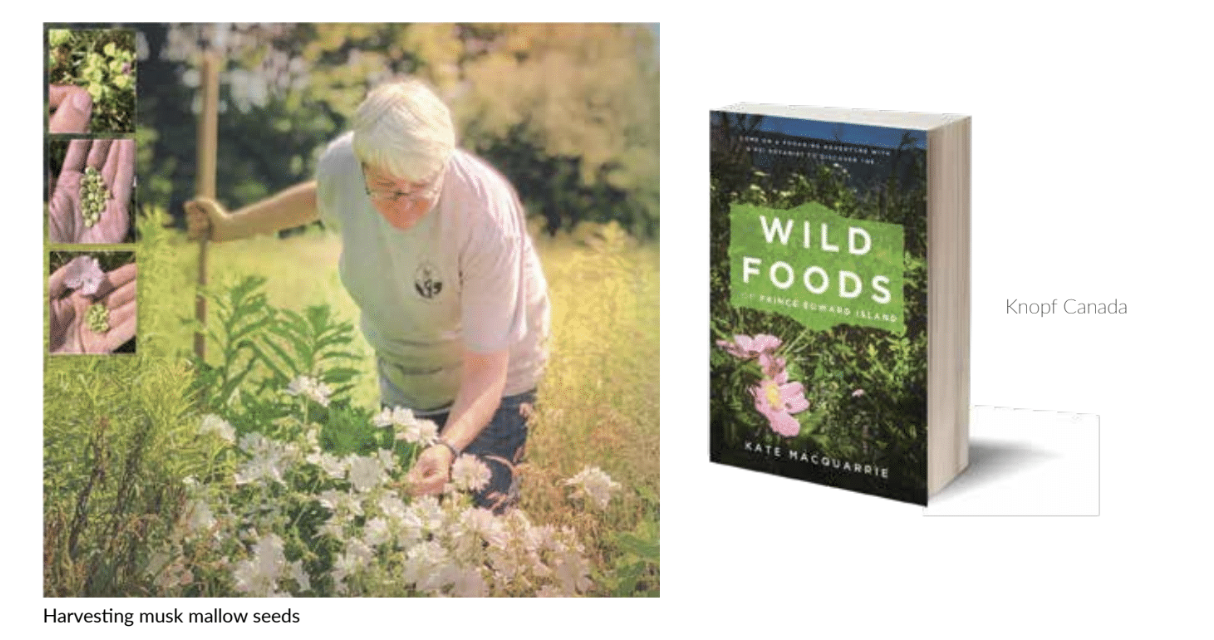
For wild food lovers, a walk in the woods, through a field or along a beach can result in the most satisfying of culinary kismet. From discovering a perfect patch of shaggy ink cap mushrooms to harvesting handfuls of dark purple serviceberries, there’s nothing quite as satisfying as finding sustenance in nature. But it’s one thing to know a plant like the back of your hand, as PEI-based biologist Kate MacQuarrie does, and another to face the nagging feeling you might have the wrong species; not to mention the anxiety posed by potential mishaps, like painful encounters with stinging nettles or itchy rosehip seed hairs, to the daunting practicalities of how to cut the right part of a plant or where to go to find success.
In her newly published Wild Foods of Prince Edward Island, longtime naturalist MacQuarrie offers both comfort and gastronomic inspiration in this charming and informative field trip across her home province. Focusing on thirty easy-to-identify species—many of which are found right across Atlantic Canada—this practical handbook is structured around seasonality. Starting with spring’s early cattail shoots, which she quick-pickles, MacQuarrie winds her way to winter’s white pine needles, which she ferments in water with sugar for a fizzy, aromatic soda. In between, she focuses on everything from overlooked urban weeds like dandelion, pineapple weed and lamb’s quarters, to more advanced targets like burdock root, salty sea rocket and chaga.
Festooned with science-packed sidebars and colour photographs to help novice foragers identify tasty targets, this guide strikes a thoughtful balance between botanical detail and convenience. For instance, MacQuarrie—whose day job is as PEI’s director of forests, fish and wildlife—suggests keeping an eye out for chokecherry’s distinctive roadside blossoms in May to harvest heavy bunches in August. For experienced wild-food folks, this book also offers many novel suggestions, like sprinkling Musk Mallow’s immature seed pods (which “look like tiny cheese wheels”) as a garnish, to using golden-hued chanterelles to infuse a savoury cheesecake. “We all come from foragers,” MacQuarrie says in the book’s introduction. With this book in hand, those curious about returning to those earliest roots will find a trusted friend. ■
KAREN PINCHIN is a Dartmouth-based food systems journalist and the author of Kings of Their Own Ocean: Tuna, Obsession and the Future of Our Seas.
Written By:


Win Your Classroom Wishlist
Stay tuned for our next contest for Atlantic Canadian teachers! In the meantime, build a wishlist of books in the ABC collection that you can shop from any time! We'll let you know when it's time to share on social media with the hashtag #ReadAtlanticABC for a chance to win books from your list (up to $250 value).

