


Story uncovers the magic of Newfoundland in her novel Urchin
Books by Heart is an initiative to help humanize Nova Scotia hospital care, with a curated collection of ebooks and audiobooks available for free to patients, families, and staff. The reading platform and program are being tested out first at the University of King’s College, and we’ve enlisted some King’s student reviewers to help promote more engagement with the collection within the King’s community. Find out more about the project (and read this book for free if you’re a member of the King’s community!) at BooksByHeartKings.ca
Kate Story grew up in a house where strange things went bump in the night.
“I don’t see ghosts myself. I’m very agnostic on the topic,” Story said. She admits that a lifetime among the storytellers, and the feywild of Newfoundland and Labrador, helped her stay open-minded about the possibilities that lay beyond the reality we experience.
“My mother could see ghosts,” Story said. “I grew up with faeries to some extent.”
Story said that the living folk culture of Newfoundland encourages literary experimentation.
Before science, wizards and prophets interpreted reality. Story’s novel weaves the supernatural with the scientific by setting her book at the birth of modernity, during one of the most significant scientific events in Newfoundland’s history. She has her publisher to thank in part for the idea.
“She contacted me and said, ‘I would like you to write a young adult novel set in Newfoundland that’s historical with faeries,’” Story said. “I guess I just came back to Marconi because I grew up on the Southside Road. Signal Hill is right there.”
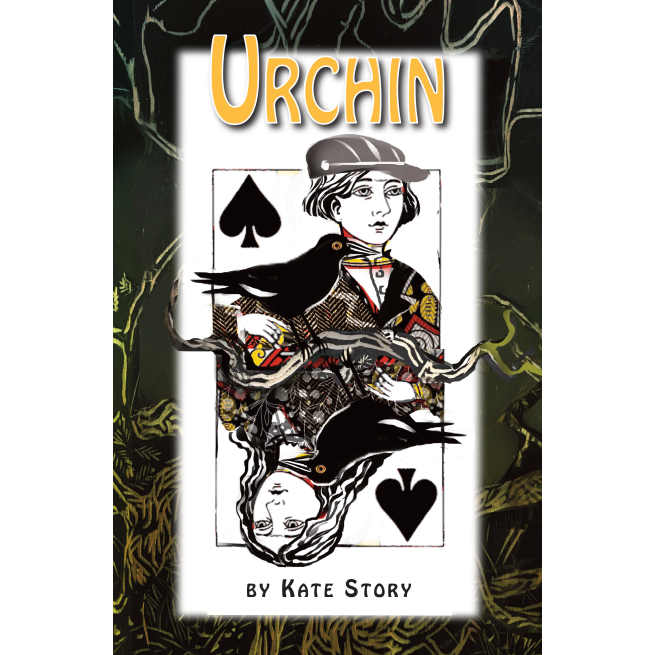
In Urchin, Marconi’s famed experiments to send the first transatlantic radio signals disturb the “Little Strangers” – the faeries who lay on the other side of the thin veil separating her characters from the metaphysical.
In Newfoundland, Story said there is still a living folk culture. She said she owes a debt of gratitude to the Memorial University of Newfoundland, who went to some length to preserve the folk tradition that has had so much impact on her work.
“They sent the students home with recorders to get all those old stories from their parents,” Story said.
Story’s gratitude for a robust storytelling environment is both professional and personal. Like many artists, Story said she takes refuge in her work. That could help explain why she is so comfortable writing young adult fiction, which is often all about identity.
“In 1901, Jack had to be a boy,” Story said, in reference to her hero, who assumes a new identity and explores their gender through it in Urchin.
“I think my writing self is sometimes smarter than me,” Story said. “It was a profound realization that I was using the book to work out my own identity as well.”
Story has made a career of operating in the spaces between artistic forms and genres. Urchin injects fantasy into the history of the industrial age. Such interstices are fecund ground for the creative exploration of one’s identity.
“That’s probably the reason the book was successful,” Story said.
Urchin was a finalist for the Governor General’s Literary Award. After a lifetime of working in the arts, Story was pleased with the recognition.
“It feels pretty darn good,” Story said. She added some advice to readers who, like her, don’t quite fit into prescribed narratives.
“I would also add that this book is great for adults. I don’t think we should be afraid to read outside of our marketing category.”

Written By:


Win Your Classroom Wishlist
Stay tuned for our next contest for Atlantic Canadian teachers! In the meantime, build a wishlist of books in the ABC collection that you can shop from any time! We'll let you know when it's time to share on social media with the hashtag #ReadAtlanticABC for a chance to win books from your list (up to $250 value).

