


The art of rebellion: Books on riot, revolt, and politics

Resistance, activism, political change. These are some of the things that are making up our current geopolitical climate locally and in Canada. Atlantic Canadian authors have crafted books that reflect on these themes.
These works inspire conversations about Canada’s path forward, addressing issues of reconciliation, inclusivity and cultural preservation. This collection of books also underscores the importance of challenging societal norms and amplifying marginalized voices.
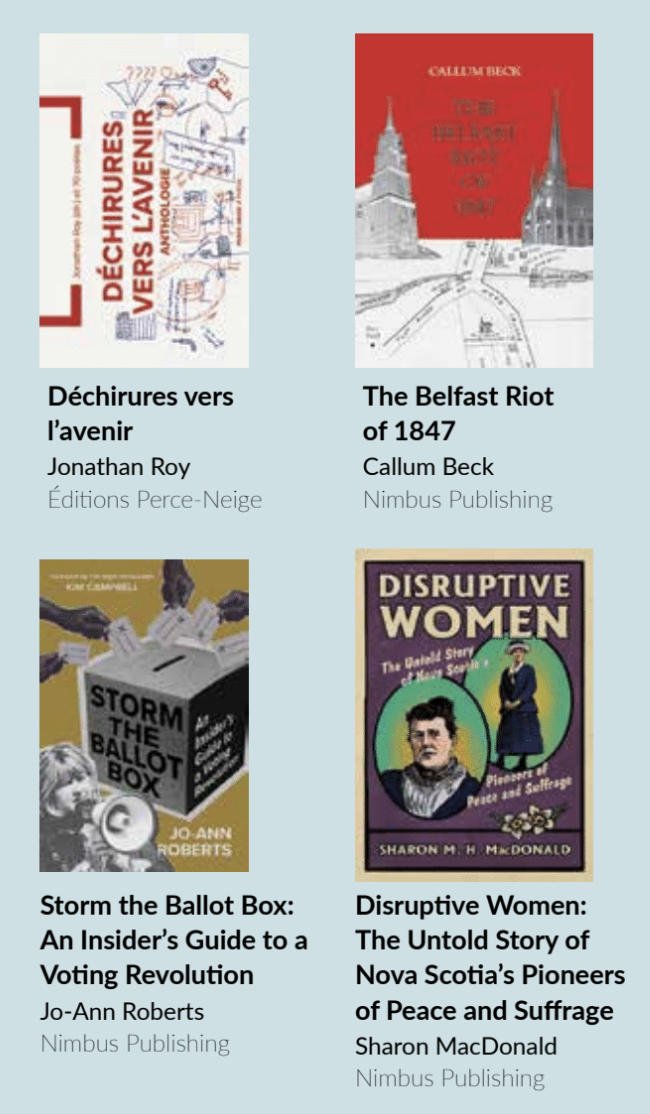
Jonathan Roy’s edited anthology Déchirures vers l’avenir highlights the enduring spirit of Acadian resistance and cultural identity through poetry.
It reflects the struggles and triumphs of the Acadian community while offering a powerful commentary on themes of rebellion and resilience. These poems resonate with Canada’s current political landscape, touching on cultural preservation, reconciliation and the complexities of regional and linguistic identities.
The collection serves as a testament to the role of art in igniting dialogue and challenging societal norms. It also is a reminder of art’s ability to ignite conversation, challenging the status quo. By showcasing poems rooted in themes of rebellion and cultural identity, the collection brings attention to historically marginalized voices and the enduring struggles of the Acadian community.
Through intergenerational perspectives, preservation of Acadian heritage—and inspiring readers to reflect on broader social and political issues, such as justice, reconciliation and inclusion—is consistent throughout the anthology. The collection is comparable to a cultural lens, offering insights into how art can amplify voices and bring about deep thought on critical issues. It encourages a reflection on Canada’s identity and the future path forward.
The Belfast Riot of 1847 by Callum Beck explores the second-worst election riot in Canadian history and how it ended up shaping Prince Edward Island’s social and political dynamics. It examines the violent clash between Scottish Protestants and Irish Catholics, highlighting the deep-rooted tensions of the time. It delves into the causes and consequences of the riot, offering a detailed narrative of the events and their lasting impact on the province’s history.
This book provides insight into how historical divisions influenced the development of cultural and political identities. It resonates with contemporary Canadian discussions about reconciliation and cultural diversity. It also addresses historical injustices, offering lessons on navigating societal challenges.
One of the current issues that this book would resonate with is the past injustices, reconciliation and a healing path surrounding the Indigenous people of Canada.
The book underscores how divisions can harden overtime, offering parallels to the importance of narrowing the gaps in understanding between communities. The themes of cultural identity and diversity are relevant to Canada’s efforts to celebrate and preserve the heritage of its marginalized groups. It also promotes inclusivity.
Jo-Ann Roberts’ book, Storm the Ballot Box: An Insider’s Guide to a Voting Revolution, addresses voter apathy issues and Canada’s electoral system vulnerabilities. From her past experiences, Roberts highlights how low voter turnout and external influences threaten the democratic process. The book empowers Canadians to reclaim their role in shaping the nation’s future through practical steps to inspire civic engagement.
Through 20 actions aimed at revitalizing democratic participation in Canada, it dissuades disinterest in the electoral process and emphasizes the significance of each individual’s vote. It highlights ways to address weaknesses in the system and encourages citizens to make informed decisions when voting. Roberts aims to inspire and empower Canadians to engage meaningfully in shaping their country’s future, regardless of political leanings.
In the context of current Canadian political discussions, the book resonates with ongoing debates about electoral reform, inclusivity, and the importance of active participation in democracy. It aligns with efforts to ensure that voices are heard, particularly when there is distrust in political systems locally, throughout Canada and globally.
The book encourages citizens to take action and strengthen the democratic foundation of Canada.
Disruptive Women: The Untold Story of Nova Scotia’s Pioneers of Peace and Suffrage by Sharon MacDonald highlights the lives of Mary Chesley and her daughter Polly, two influential activists from Nova Scotia. With her Quaker heritage, Mary was a leader in the Woman’s Christian Temperance Union and played a critical role in the fight for women’s voting rights. Polly pursued advanced education at the Sorbonne and the London School of Economics.
She became deeply involved in pacifist and leftist causes in London and even collaborated with Mahatma Gandhi on India’s independence efforts.
The book uncovers their often-overlooked contributions to social change and uses rare photographs to bring their stories to life. It also highlights the broader movements for peace and suffrage in Nova Scotia, presenting a detailed and engaging account of these trailblazers who reshaped the province’s political and social landscape.
Challenging societal norms and advocating for change remain relevant in today’s political environment. Those include gender equality, cultural preservation and reconciliation. It reminds us of the power of grassroots movements and the need to amplify marginalized voices.
By exploring the Chesleys’ efforts to address systemic injustices, the book provides valuable lessons for navigating contemporary challenges in Canada and beyond.
AMEETA VOHRA is an award-winning journalist from Halifax.
Written By:


Win Your Classroom Wishlist
Stay tuned for our next contest for Atlantic Canadian teachers! In the meantime, build a wishlist of books in the ABC collection that you can shop from any time! We'll let you know when it's time to share on social media with the hashtag #ReadAtlanticABC for a chance to win books from your list (up to $250 value).

